
Protected Geographical Indication (P.G.I.)
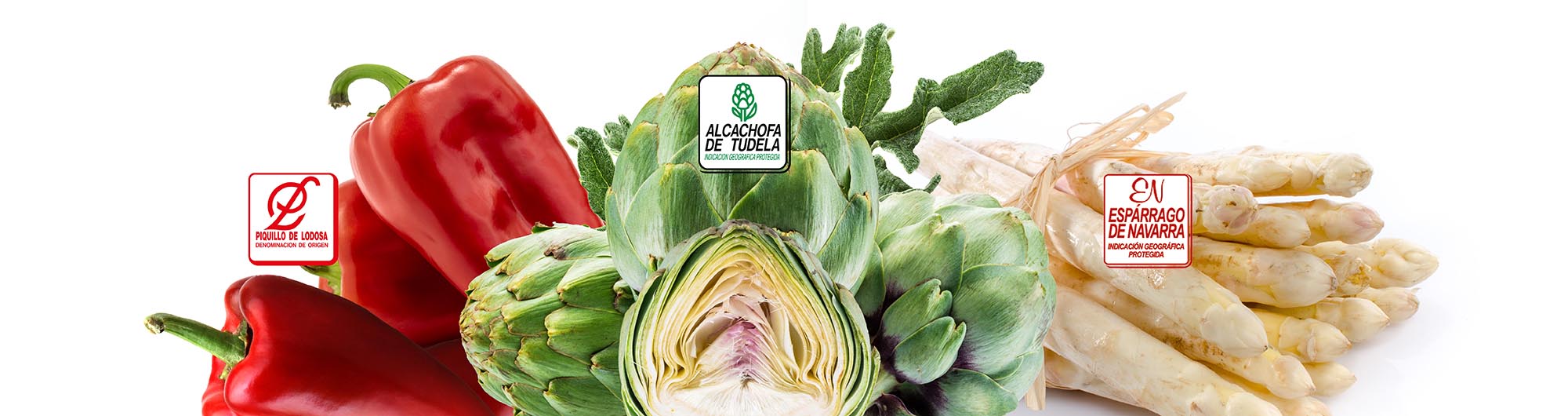
The Protected Geographical Indication (P.G.I.) is a European Union recognition that highlights agri-food products linked to a specific region, where at least one stage of the production process - be it production, processing or preparation - must take place in the designated geographical area. This label focuses on the link between the product and its reputation, which is usually based on the traditions and characteristics of the region of origin. Thus, the P.G.I. ensures that consumers enjoy products that carry the essence of a land, even if not all stages of production take place in the same place.
Unlike the P.D.O., which requires all stages of production to take place in the same region, the P.G.I. allows part of the process to take place outside the defined geographical area, although it must follow strict regulations to preserve the quality and authenticity of the product.
For the consumer, the P.G.I. represents a guarantee that the product follows traditional production methods and that its quality is associated with the region of origin. It is a way of accessing products with a unique geographical identity and know-how, while supporting rural economies and small producers. In addition, this label helps to protect Europe's gastronomic and cultural diversity, allowing each region to highlight its specialties and offer consumers a genuine experience.
Protected Designation of Origin (P.D.O.)
The Protected Designation of Origin (P.D.O.) is a certification of quality and authenticity granted by the European Union to agri-food products that owe their uniqueness, quality and reputation to a specific region. This seal guarantees that each stage of production, processing and preparation takes place in a specific geographical area, whose natural conditions, such as climate and soil, together with local know-how, result in a unique product. In this way, the P.D.O. not only certifies quality, but also the cultural and historical link of the product with its place of origin, reflecting a tradition handed down through generations.
For example, a food with a Protected Designation of Origin is not only produced in a specific region, but is also made according to traditional methods that have been carefully preserved. From the cultivation or feeding of the animals to the production process, all steps are carried out in the designated area. In this way, the consumer obtains an authentic and reliable product, whose taste and quality have been verified and protected. In addition, the P.D.O. promotes the development of rural communities and contributes to the economic sustainability of these areas, generating employment and keeping their traditions alive.
The P.D.O. brings transparency to the market, as consumers can easily identify these products and know their origin and production methods. By buying a product with this label, the consumer not only gets a high quality gastronomic experience, but also contributes to the preservation of Europe's cultural and agricultural heritage.

Certificartion P.G.I.
All the processes of cultivation, preparation, packaging and labelling of the final product are audited by the Instituto Navarro de Tecnologías e Infraestructuras Agroalimentarias, S.A. This is the inspection body of the PGI in charge of guaranteeing that the product complies with the requirements of its Specifications.
INTIA is accredited by ENAC (National Accreditation Body) in accordance with European Standard UNE-EN ISO/IEC 17065:2012. The certification system implemented is based on:
- Field control
- ontrol of stockists
- Control in the industry
- Quality control of the finished product

Certification P.D.O.
All the processes of cultivation, reception of the fruit, processing, packaging and labelling of the final product are audited by INTIA, Instituto Navarro de Tecnologías e Infraestructuras Agroalimentarias, S.A. This is the PDO control body responsible for guaranteeing that the product complies with the requirements of its Specifications.
INTIA is accredited by ENAC (National Accreditation Body) in accordance with European Standard UNE-EN ISO/IEC 17065:2012. The certification system implemented is based on:
- Control in the field
- Control in the industry
- Product quality control
History P.G.I. Tudela artichoke
The Tudela artichoke, also known as ‘the flower of the market garden’, achieved Protected Geographical Indication (PGI) status in 2001 for both fresh and preserved artichokes, provided that it was produced in one of the 33 towns in the Ribera de Navarra region, with the district of Tudela as the centre of gravity.
The first cultivation of this vegetable in Navarra dates back to the time of Al-Andalus. Since then, the farmers of Tudela have been tenaciously and meticulously working on the selection process to achieve the cultivation of the Blanca de Tudela. In fact, this is the only variety of artichoke grown in Navarra.
However, given the success and fame that this artichoke began to acquire throughout Spain in the 1980s for its crunchy texture, slightly bitter taste and juiciness, the plant, which originated in Navarra, began to be planted all over the country.
History P.G.I. Asparagus from Navarra
The Specific Designation Asparagus of Navarra was approved by Order of the Regional Ministry of Agriculture, Livestock and Forestry of the Government of Navarra on 6 October 1986, and in 1987 it was ratified by the Ministry of Agriculture, Fisheries and Food.
A determining factor in those early days was the great socio-economic importance of asparagus cultivation in the 1980s, which formed the basis for the development of the canning industry located in the Ebro Valley.
This industrial boom led to specialisation in the production and processing of the product, which led to the creation of the Specific Designation and its Regulatory Board in order to guarantee and defend Navarrese asparagus against competition from other producing areas.
Este auge industrial, dio lugar a la especialización de la producción y elaboración del producto, materializándose así la Denominación Específica y su Consejo Regulador con el fin de garantizar y defender el espárrago navarro frente a la competencia de otras zonas productoras.
From the beginning it was thought that the Designation should cover areas of Navarra, La Rioja and Aragon because of the similar characteristics of the product and the conditions of the environment, but, however, due to legal-administrative problems, this did not become a reality until 1993, when the entry of some municipalities belonging to the Communities of Aragon and La Rioja was approved. At present, 176 municipalities in Navarra (plus Bardenas) are included in the Designation, 43 in Aragon and 38 in La Rioja.
Finally, in 2003, the Regulation was again amended to provide for the extension of the production area and to modify the authorised varieties. Furthermore, it was adapted to Community regulations and the Specific Designation was registered as a Protected Geographical Indication in the Community Register by Commission Regulation (EC) No 1107/96 of 12 June.
History P.D.O. Piquillo from Lodosa
In the area covered by the Piquillo from Lodosa Designation of Origin, vegetables have traditionally been grown and preserved. Piquillo peppers were preserved by roasting the peppers, peeling them dry and then packaging them so that they could be enjoyed all year round.
From the 1960s onwards, many locals moved to other regions and took their canned piquillo peppers with them, making them known in other regions and disseminating their reputation, so that it was considered necessary to protect them by creating a Designation of Origin.
The Regulations of the Piquillo from Lodosa Designation of Origin and its Regulatory Board were approved by Order of the Regional Ministry of Agriculture, Livestock and Forestry of the Government of Navarra on 16 February 1987. Subsequently, on 8 May of the same year, it was ratified by the Ministry of Agriculture, Fisheries and Food.